
The neon glow of sold-out arenas and Las Vegas residencies tells only part of Bruno Mars's story. Long before the Grammys and global tours, there was a very different reality unfolding in Honolulu.
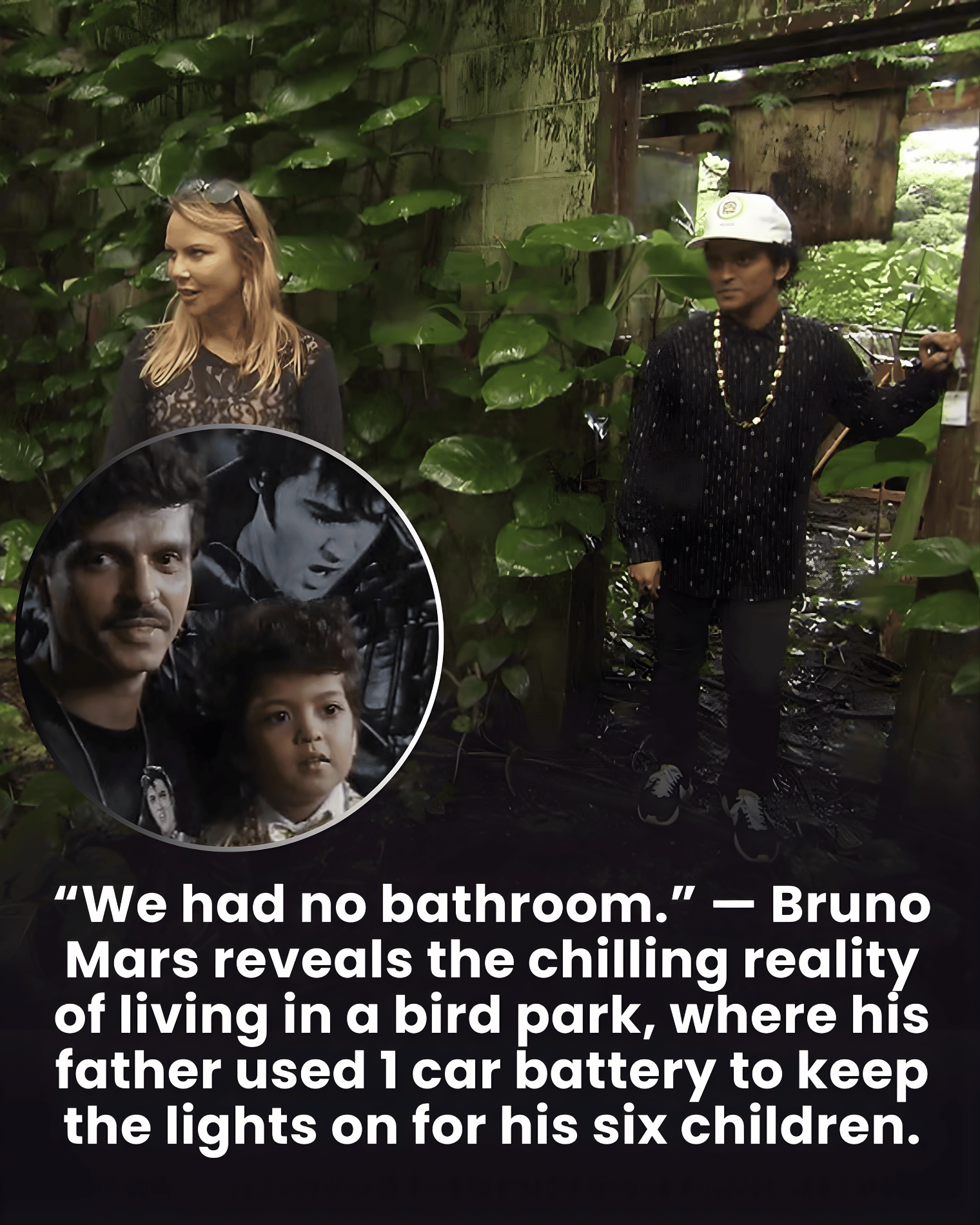
After his parents divorced and the family band collapsed, financial stability disappeared almost overnight. Bruno has spoken candidly about a period when he, his father Peter Hernandez, and his brother Eric were forced to live in the back of a van. Eventually, they found shelter in an abandoned bird park — a place never meant to house a family.
"We had no bathroom," Bruno has recalled.
Electricity wasn't guaranteed. At times, a single car battery powered the lights. Showers were replaced by improvised solutions. For a young boy trying to keep up appearances at school, the logistics of survival carried a quiet humiliation. He remembers searching for public restrooms before sunrise just to brush his teeth before catching the bus.
The contrast between performing in front of tourists at night and scrambling for basic necessities by morning was jarring. Hawaii's postcard beauty masked a private struggle that few outsiders could see.
Yet Bruno doesn't frame those years solely as trauma. He frames them as ignition.
Watching his father — a musician determined to keep playing despite setbacks — shaped his understanding of resilience. Peter Hernandez continued to perform, hustling gigs to keep food on the table. The message was clear: talent alone wasn't enough. Survival required grit.
That lesson hardened into a promise.
Bruno has said he vowed they would never be "room-less" again. It wasn't about luxury. It was about security. A roof. Stability. Dignity.
When listeners hear the polish of albums like 24K Magic, they're hearing the product of relentless discipline. Studio perfectionism. Endless rehearsals. An obsession with performance quality. Behind that shine is a memory of instability he refuses to revisit.
The shame he felt as a child became fuel rather than anchor. Instead of shrinking from it, he transformed it into drive. Every late-night writing session, every choreography rehearsal, every revision of a hook carried the unspoken motivation to build permanence where there once was none.
Success eventually brought him back to Las Vegas — not as a struggling performer, but as a headliner commanding the Strip. The symbolism isn't lost on him. The city that represents spectacle and abundance stands in stark contrast to the makeshift living conditions of his youth.
But he doesn't romanticize the hardship.
He acknowledges it as formative.
Homelessness etched something into his character that no award could replicate: urgency. Gratitude. Hunger.
Today, when Bruno speaks about work ethic, it doesn't sound like branding. It sounds like memory.
Because for him, the promise wasn't abstract ambition.
It was survival — a vow whispered in the dark, powered by a single car battery, that one day the lights would stay on for good.